What Happens When the Fed Raises Rates? A Beginner’s Guide
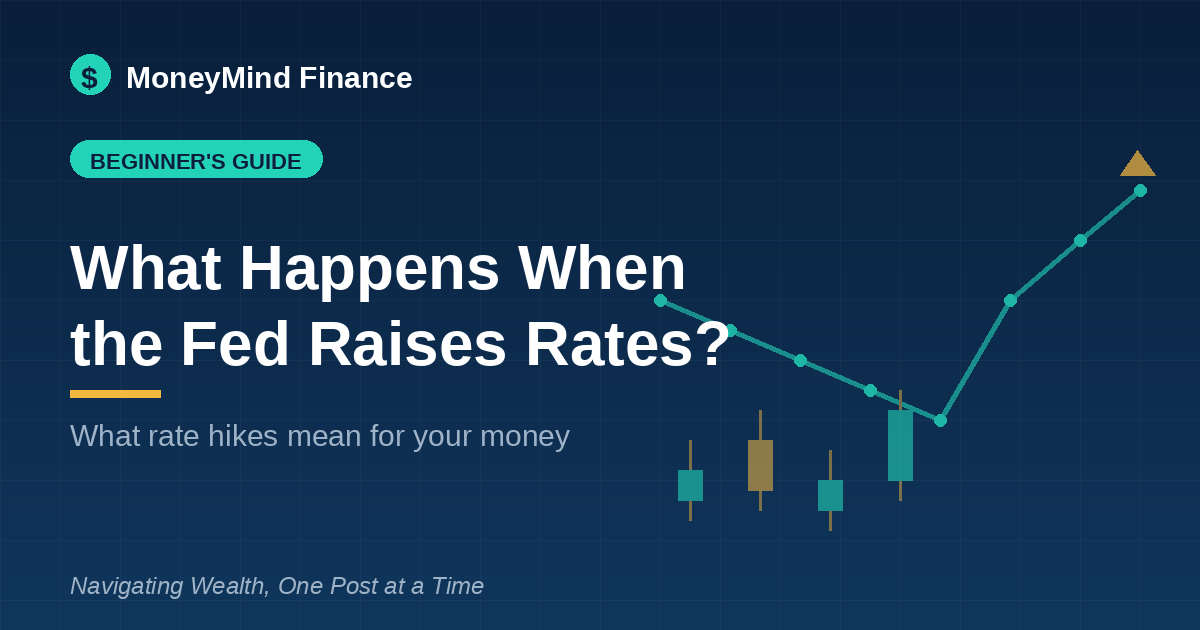
What Happens When the Fed Raises Rates? A Beginner’s Guide
Every few weeks, headlines announce that "the Fed" is meeting, and markets hold their breath waiting to hear one thing: what happens to interest rates. If you have ever wondered why a group of officials in Washington can move your mortgage payment, your savings account, and the price of your favorite stock all at once, this guide is for you. We will explain, in plain English, what it means when the Federal Reserve raises rates, why it does it, and how it quietly reaches into your own wallet.
First, What Is "the Fed"?
The Federal Reserve, usually shortened to "the Fed," is the central bank of the United States. Think of it as the referee for the whole economy. Its two main jobs are keeping prices stable (fighting inflation) and keeping employment healthy. It does not set the price of groceries or hand out jobs directly. Instead, it uses one powerful lever: a key interest rate that influences the cost of borrowing money across the entire country.
That rate is called the federal funds rate, and it is the rate banks charge each other for very short-term loans. You never pay it directly, but it ripples outward into almost every rate you do pay, from credit cards to car loans to mortgages.
What "Raising Rates" Actually Means
When the Fed "raises rates," it nudges that federal funds rate higher. The goal is to make borrowing money more expensive and saving money more rewarding. When loans cost more, people and businesses borrow and spend a little less. When spending cools, demand eases, and that helps bring down inflation (the general rise in prices over time).
Raising rates is essentially the Fed tapping the brakes on the economy. Cutting rates is pressing the gas. Neither is good or bad on its own, they are simply tools for different conditions. The Fed raises rates when the economy is running hot and prices are climbing too fast, and it cuts them when the economy needs help.
Why the Fed Raises Rates: The Inflation Connection
The usual reason for a rate hike is inflation running above the Fed's comfort zone. When prices rise too quickly, your money buys less each month, which is why a rate hike, though it sounds unfriendly, is meant to protect the value of your dollars over time.
The tool most people watch is the CPI (Consumer Price Index), the best-known scorecard for inflation. When CPI readings come in hotter than expected, the odds of a rate hike go up, and markets often react immediately, sometimes before the Fed even meets.
How a Rate Hike Reaches Your Wallet
Here is where it gets personal. A single decision in Washington shows up in your everyday finances in a few predictable ways.
| When the Fed raises rates | What it means for you |
|---|---|
| Borrowing gets more expensive | Higher rates on new mortgages, car loans, and credit-card balances |
| Saving gets more rewarding | Better yields on savings accounts, CDs, and money-market accounts |
| Growth slows on purpose | Businesses borrow and hire a little less, which can cool the job market |
| Stocks often wobble | Fast-growing companies usually feel the most pressure (more on this below) |
The saving side is the silver lining most beginners miss. When rates are high, the cash in a high-yield savings account earns much more, which is one reason an emergency fund works harder in a high-rate world. I cover that in Emergency Fund Basics: How Much to Save in 2026.
How Rate Hikes Affect Your Stocks
Higher rates tend to pressure the stock market, and they hit some stocks harder than others. Fast-growing companies, especially in technology, are usually the most sensitive. Here is the simple reason: much of their value is based on profits expected years in the future, and when interest rates rise, those future profits are worth a little less today. Higher rates also mean investors can earn a decent, safe return from things like savings and bonds, so they demand more before taking a risk on stocks. The same logic weighs on riskier assets like crypto, which is one reason interest-rate expectations feed into Bitcoin price predictions.
This is why you often see tech-heavy indexes dip on days when a rate hike looks more likely. It does not mean those companies are suddenly worse businesses, it means the math investors use to value them has shifted. Steadier, profitable companies that pay dividends often hold up better in a rising-rate environment. And when only a few giant names are holding the market up, higher rates can make the whole thing feel shakier, an idea I unpack in Market Breadth: Why Record Highs Rest on a Few Stocks.
The Counter-Argument (And Why It's Serious)
It is fair to ask: if rate hikes slow the economy and rattle stocks, aren't they simply bad? Not quite, and the nuance matters. Letting inflation run unchecked is far more damaging over time, because it erodes wages, savings, and the value of every dollar you hold. A short period of higher rates can be the price of protecting your money's value for years to come.
The rebuttal is about balance and timing. Raise rates too aggressively and the Fed can tip the economy into a downturn and cost people jobs. Move too slowly and inflation digs in. There is no perfectly safe choice, only trade-offs, which is exactly why every Fed meeting draws so much attention. For you as a beginner, the takeaway is not to fear rate hikes but to understand which way the wind is blowing and position your saving and investing accordingly.
The One Number to Watch
If you follow just one thing, watch the direction of inflation, usually the year-over-year CPI figure released each month. When inflation is cooling, the Fed has room to hold or cut rates, which tends to be friendly for stocks and for borrowers. When inflation is heating up, expect the Fed to lean toward hikes, which rewards savers and pressures rate-sensitive stocks. You do not need to predict the Fed. You just need to notice the trend, because the Fed is usually reacting to that same trend.
Frequently Asked Questions
Q: Does a Fed rate hike mean I should sell my stocks?
A: Usually not, and reacting to a single meeting is rarely wise. Rate hikes can pressure fast-growing stocks in the short term, but for long-term investors a steady, diversified plan tends to beat trying to time the Fed.
Q: How does a rate hike help me if I am a saver?
A: Higher rates usually push up the yields on savings accounts, CDs, and money-market accounts, so your cash earns more for doing nothing. It is one of the few times rising rates work directly in your favor.
Q: How often does the Fed change rates?
A: The Fed's rate-setting committee meets roughly eight times a year. It does not change rates at every meeting; it often holds steady and signals what it expects to do next.
Q: Why do stocks sometimes rise even when rates go up?
A: Markets care about expectations. If a hike was already widely expected, or if the Fed signals it is nearly done raising, stocks can rally on relief even as rates tick up. It is the surprise, not the move itself, that tends to jolt markets.
Related beginner guides
- How to Research a Stock Before Buying: A Beginner’s 7-Step Checklist
- CLARITY Act: A Beginner’s Crypto Rulebook to Watch
- Stocks That Could Explode: How to Spot Them Without Getting Burned
- Bitcoin Price Predictions 2026: Why Experts Disagree
Disclaimer: Content on this site is for informational and educational purposes only and does not constitute financial, investment, or trading advice. I am not a licensed financial advisor. Always conduct your own research and consult a licensed professional before making investment decisions.
Read next: Market Week Ahead: Fed Meeting and Big Tech Earnings
All Categories
Recent Posts
Meta and Tesla Earnings Wednesday: Nasdaq Fell 4.5%
JPMorgan Stock to Watch: $15.3B Profit, Buffer at 13.9%
Delta Stock to Watch: Fuel Up 75%, Profit Still Held
Tags

Navigating wealth, One post at a time