Palantir stock for beginners is back in the spotlight after the data-analytics company reported blockbuster earnings on August 3, 2026, and the shares rose about 12% the next day. If you're a beginner investor, this is a great real-world example of two forces pulling on the same stock at once: dazzling growth on one side and a very expensive price tag on the other. This beginner-friendly guide explains what Palantir does, why its latest results attracted attention, the strongest argument for caution, and the key number to watch.
What Palantir Actually Does
Palantir Technologies builds software that helps big organizations make sense of huge piles of data. Think of it as a very smart control room: it pulls information from many different systems into one place, then uses artificial intelligence (AI) to spot patterns and suggest decisions. Its longtime customers are governments and defense agencies, but in the last two years its fastest growth has come from regular businesses, hospitals, banks, manufacturers and retailers using Palantir's AI tools to run their operations.
One term you will see a lot is market cap, short for market capitalization. It is simply the company's share price multiplied by the figure of shares the market's price tag for the whole business. Palantir has grown into one of the largest software companies in the United States, which is exactly why every earnings report it releases gets so much attention.
Why the Q2 Numbers Turned Heads
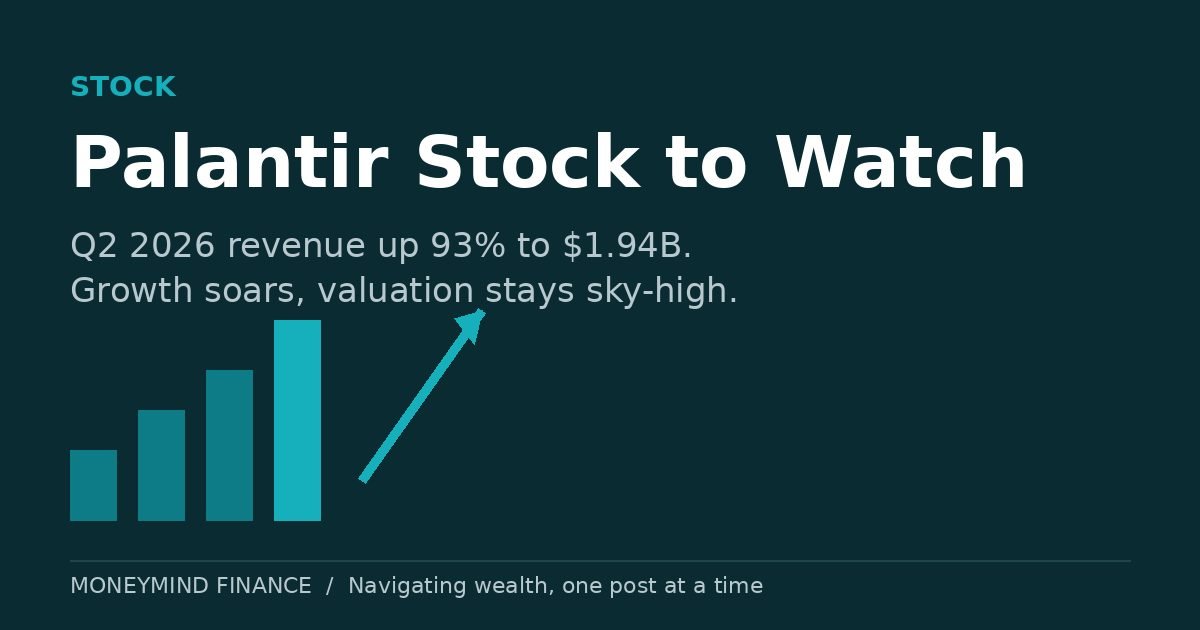
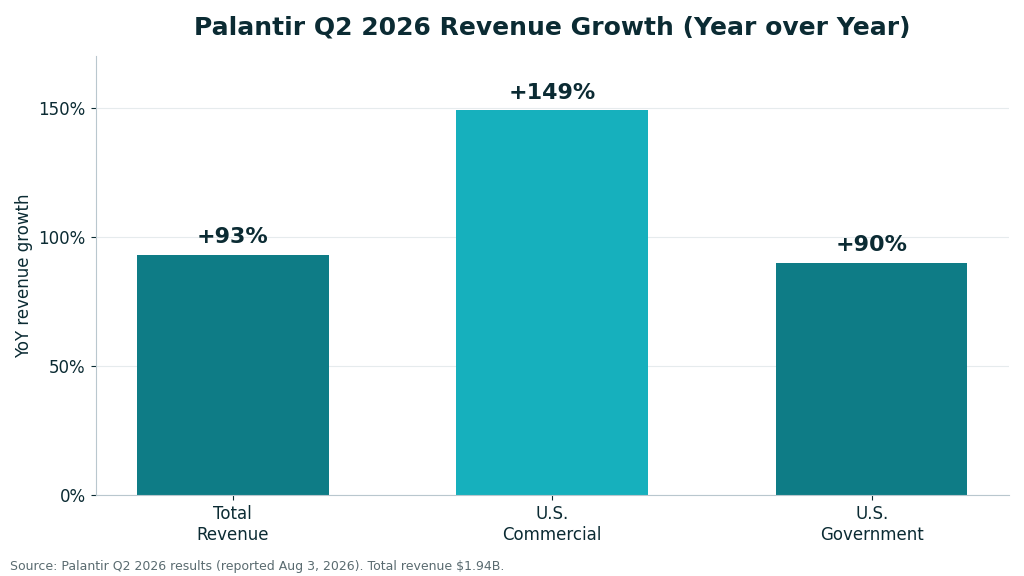
Palantir's second-quarter revenue grew about 93% compared with a year earlier, reaching $1.94 billion. When you see "year over year" (often shortened to YoY), it just means comparing this quarter to the same quarter twelve months ago, a way to strip out seasonal ups and downs. For a company this size to grow revenue by roughly 93% is unusual; most large software firms would be thrilled with 20%.
The standout was U.S. commercial revenue sales to American businesses which soared about 149% to $764 million. U.S. government revenue also grew around 90% to $809 million. On the profit side, adjusted earnings per share (EPS, or profit divided across all the shares) came in at 41 cents, ahead of the 35 cents Wall Street analysts expected. The company also raised its full-year 2026 revenue outlook to roughly $8.15 billion, about 82% growth for the year.
Two more beginner-friendly signals stood out. Net dollar retention hit 157%, which means existing customers spent about 57% more than they did a year earlier, a sign people who try Palantir tend to buy more. And its "Rule of 40" score reached a record 155%. The Rule of 40 is a quick health check for software companies: add revenue growth and profit margin together, and anything above 40 is considered strong. Palantir blew past it. For a plain-English refresher on reading numbers like these, see our guide on how to research a stock before buying.
The Counter-Argument (And Why It's Serious)
Here is the catch, and it is a real one: Palantir's stock price looks expensive relative to the company's sales. The most common yardstick here is the price-to-sales ratio (P/S), the company's market cap divided by its yearly revenue. A typical software stock might trade around 10 to 15 times sales. Depending on the measurement date, Palantir has traded anywhere from the low 40s to well above 60 times sales in 2026, far above its own long-run average.
Skeptics argue the stock is "priced for perfection." That phrase means the price already assumes years of flawless growth, so even a small stumble, a slower quarter, a lost contract, or a broad market pullback could send the shares sharply lower. One analyst who rates the stock a "Hold" put it bluntly, warning the market has left "little to no room" for error.
The measured rebuttal: fast-growing companies often deserve richer valuations because they are expected to be far bigger in a few years. If Palantir keeps compounding at anything close to its current pace, today's price may look more reasonable in hindsight. But "if" is the key word. A high valuation does not make a stock a bad company; it makes the stock less forgiving. That is a crucial distinction for beginners, and a good reminder of why spreading money across many companies through index funds can soften the blow when any single high-flyer wobbles.
The One Number to Watch
If there's just one Palantir figure to watch from here, its U.S. commercial revenue growth. That is the part of the business that has been growing fastest (about 149% last quarter) and it is what most justifies the lofty valuation. As long as U.S. businesses keep signing up and expanding their use of Palantir's AI tools, the growth story stays intact. The day that number starts slowing meaningfully is the day the "priced for perfection" worry becomes far more serious. Watching it each quarter tells you, in one glance, whether the engine behind the stock is still running hot.
Frequently Asked Questions
Is Palantir profitable? Yes. Palantir reports consistent profits and strong free cash flow (the cash left over after running the business), which sets it apart from many fast-growing tech names that still lose money.
What does "net dollar retention" mean? It measures how much more (or less) existing customers spend versus a year ago. Palantir's 157% means its current customers grew their spending by about 57%, a healthy sign of demand.
Why is Palantir's stock so expensive? Investors are paying up for very fast growth and a leading position in AI software. The risk is that the high price leaves little cushion if growth slows.
Is this a recommendation to buy Palantir? No. This article is educational and frames Palantir as a stock to watch and understand, not a buy or sell call. Always do your own research first.
Disclaimer: Content on this site is for informational and educational purposes only and does not constitute financial, investment, or trading advice. I am not a licensed financial advisor. Always conduct your own research and consult a licensed professional before making investment decisions.