
Ethereum Staking ETFs: A Beginner’s Guide to ETH Yield
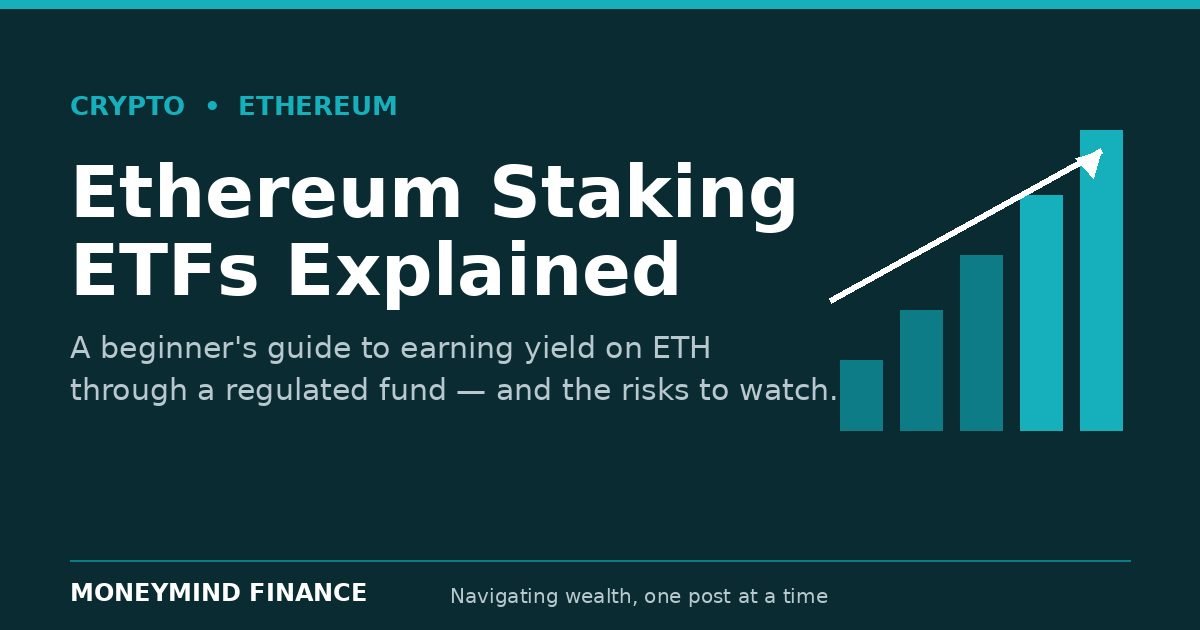
Ethereum Staking ETFs: A Beginner’s Guide to ETH Yield
For years, holding cryptocurrency worked a bit like keeping cash in a shoebox: you hoped the value went up, but the coins themselves just sat there doing nothing. In 2026 that quietly changed for one of the biggest coins on the market. A new kind of investment product, the Ethereum staking ETF now lets ordinary investors earn a small, regular reward on their Ethereum without touching complicated crypto software. If you are new to investing and have heard the word “staking” thrown around, this is the plain-English guide to what just happened and why it matters.
What Is an Ethereum Staking ETF?
Let’s unpack that phrase one piece at a time, because three bits of jargon are hiding inside it.
Ethereum (ETH) is the second-largest cryptocurrency after Bitcoin. Think of it as a digital coin that also powers a huge network of apps.
An ETF, or exchange-traded fund, is simply a basket you can buy through a normal brokerage account, the same way you’d buy a share of Apple. Instead of you buying and safely storing the crypto yourself, the fund holds it for you and you own a slice.
Staking is the reward part. Ethereum runs on a system where people lock up some of their coins to help keep the network secure and running a little like putting money in a fixed savings account to support a bank. In return, the network pays them a steady reward, usually a few percent per year. A staking ETF does that locking-up for you automatically, then passes most of the reward back to you. So an Ethereum staking ETF is a regular-brokerage product that both tracks the price of ETH and earns you a small yield on top.
How the Rewards Actually Work
The product that put this on the map is BlackRock’s iShares Staked Ethereum fund, which trades under the ticker ETHB and launched in March 2026. According to the fund’s own disclosures, it stakes most of its Ethereum, roughly 70% to 95% through a partner called Coinbase Prime. The gross reward has been running at about 3.1% a year, paid out monthly. Investors receive roughly 82% of that reward, while BlackRock and its partner keep about 18% as a fee. That works out to a net reward for you of around 2.5% a year.
Grayscale, another big fund manager, followed with its own staking products and declared one of the first staking payouts for a U.S.-listed Ethereum fund. None of this would have been allowed a year earlier. The turning point came in March 2026, when two U.S. regulators, the SEC and the CFTC issued a joint statement clarifying that staking rewards are not treated as securities. That decision opened the door for mainstream firms to offer staking inside a regulated fund.
Why does a small yield matter so much? Because it compounds quietly over time. To picture it simply, imagine you held $10,000 in one of these funds and just for illustration, the price of ETH stayed perfectly flat. At a net reward of about 2.5% a year, that holding would grow to roughly $11,336 over five years purely from the staking payouts, versus $10,000 in a plain fund that earns nothing extra. That is more than $1,300 of “free” coins you would not otherwise have. (Real prices never stay flat, but the example shows what the yield alone contributes.)
Read: Bitcoin ETF Inflows Return After a Record June Selloff for a beginner’s explainer on how ETF flows move crypto prices.
Why This Matters for a Beginner Right Now
Timing is everything, and mid-2026 has been a bumpy stretch for crypto. Ethereum has been trading in the $1,700 to $1,800 range in July, well below the $2,000-plus levels seen earlier in the year. Crypto funds saw heavy withdrawals in June before steadier inflows returned in early July, and around July 12 ETH bounced roughly 20% off its recent lows. In other words, prices have been volatile and nerves are still a little raw.
For a beginner, the staking ETF is interesting precisely because it changes the math on a down or sideways market. In a flat market, a plain crypto holding just waits. A staking product keeps paying you a small reward the whole time, which can soften the pain while you wait for prices to recover. It won’t rescue you from a big drop, but it does mean your money is at least doing something every month rather than sitting idle.
The Counter-Argument (And Why It’s Serious)
Here is the strongest case against getting excited, and it deserves real respect. A 2.5% yearly reward sounds nice, but Ethereum’s price can swing 20% in a matter of days. If ETH falls 15% in a month, your tiny staking reward is completely swamped by the drop in the coin’s value. Critics argue that dressing up a highly volatile asset with a modest yield can make it feel safer than it really is, a bit like being handed a small umbrella in a hurricane. There are also fees (that 18% cut is not nothing), and staking carries its own technical risks, such as “slashing,” where a network penalty could reduce the staked coins.
The measured response is this: the reward is a bonus, not a reason to buy. If you would not be comfortable owning Ethereum for its own sake, understanding it can lose a large chunk of its value, then a 2.5% yield should not change your mind. But if you already understand and accept crypto’s wild ride, then earning a regulated, hands-off reward on coins you were going to hold anyway is a genuine improvement over holding them for nothing. The yield is icing; the cake is still a volatile asset you must size sensibly.
Read: Why Cathie Wood Bought Amazon, Robinhood, and Coinbase for a look at how one well-known investor thinks about crypto-linked risk.
The One Number to Watch
If you follow just one figure, make it the net staking reward rate, currently around 2.5% a year after fees. This number tells you exactly what extra reward you are being paid for the risk you are taking, and it moves over time as more or fewer people stake Ethereum. If that rate climbs, staking ETFs become more attractive; if it shrinks toward zero while fees stay the same, the “bonus” largely disappears and you are simply holding volatile crypto again. Watching that single rate keeps you honest about whether the reward still justifies the ride.
Read: Altcoins to Watch: A Beginner's Guide Beyond Bitcoin
Frequently Asked Questions
Is an Ethereum staking ETF safe?
It is more convenient and regulated than staking crypto yourself, but it is not “safe” in the way a savings account is. The price of Ethereum can fall sharply, and that risk is far larger than the small reward you earn.
How is this different from a normal Ethereum ETF?
A normal ETH ETF only tracks the coin’s price. A staking ETF does the same and pays you a small recurring reward, typically a few percent a year, from helping run the Ethereum network.
Do I get the reward as cash?
It depends on the fund, but rewards are generally reflected in the value of your holding or paid out periodically. Always check the specific fund’s documents, and remember rewards can be taxable.
Should a beginner buy one?
Only if you already understand and accept the price risk of owning Ethereum. The staking reward is a helpful extra, not a reason on its own to invest. Start small and never invest money you cannot afford to lose.
Disclaimer: Content on this site is for informational and educational purposes only and does not constitute financial, investment, or trading advice. I am not a licensed financial advisor. Always conduct your own research and consult a licensed professional before making investment decisions.
All Categories
Recent Posts

Meta and Tesla Earnings Wednesday: Nasdaq Fell 4.5%
JPMorgan Stock to Watch: $15.3B Profit, Buffer at 13.9%

Delta Stock to Watch: Fuel Up 75%, Profit Still Held
Tags

Navigating wealth, One post at a time