
Shares of Rivian surged 26.64% to $17.73 after a wave of analyst upgrades followed the company’s fourth-quarter results and updated 2026 outlook. The move reflects more than a short-term bounce, it signals a shift in how Wall Street is evaluating the electric vehicle maker’s path to scale, profitability, and competitive positioning.
With a market capitalization of roughly $22 billion and a 52-week trading range between $10.36 and $22.69, Rivian remains a volatile stock. But the recent rally suggests that investors see improving visibility into its next growth phase.
Below is what changed and what investors should be watching next.
Rivian didn’t deliver explosive guidance. In fact, its 2026 outlook largely aligned with consensus expectations. What mattered was that it didn’t disappoint.
In a market that has punished EV manufacturers for demand softness, pricing pressure, and capital burn, simply meeting expectations can be enough to reset sentiment. TD Cowen raised its price target from $13 to $17, while UBS moved from a Sell rating to Neutral with a $16 target. The message: downside risks now look more balanced relative to valuation.
You May Want To Read This: Is Oklo (OKLO) Stock a Buy After Meta’s Nuclear...
When analysts upgrade after prolonged skepticism, it often signals that worst-case scenarios are being taken off the table. For Rivian, concerns about slowing EV demand and internal competition between its premium R1 lineup and future models appear less threatening than previously feared.
For investors, that reduces the probability of severe downside but it does not yet guarantee upside execution.
The most important catalyst ahead is the launch of Rivian’s R2, its first mass-market vehicle priced under $50,000. That price point is critical: nearly 70% of Americans say they want their next vehicle purchase to fall below that threshold.
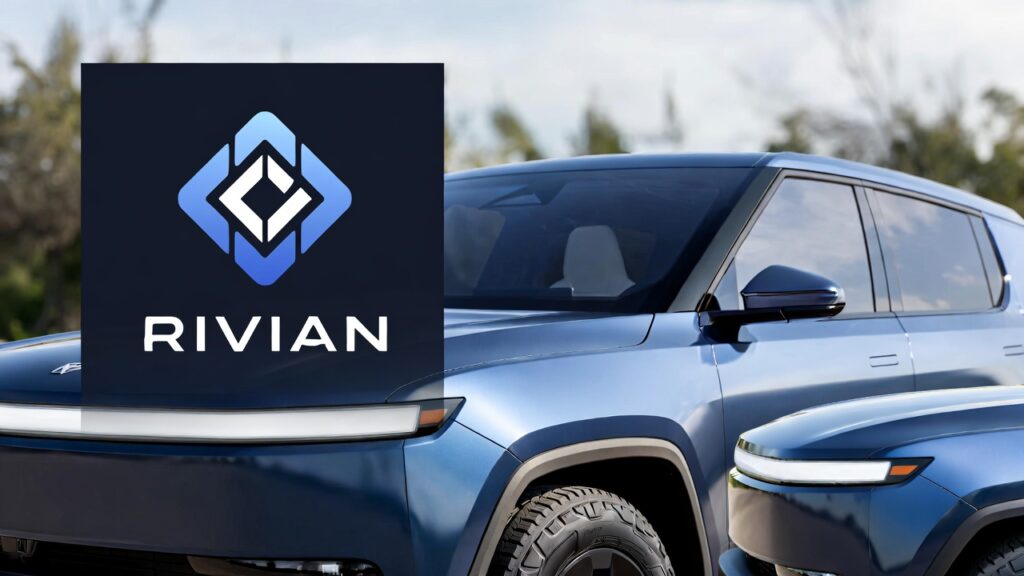
Up to now, Rivian has focused on premium trucks and SUVs. Moving downmarket is a strategic pivot and a necessary one. History shows that EV manufacturers only achieve durable profitability when they reach meaningful volume at accessible price points.
The blueprint is clear. Tesla became dominant not through luxury models, but via the Model 3 and Model Y, which now represent over 90% of its vehicle sales. Rivian is attempting a similar transition with the R2, followed by the R3 and R3X through 2027.
However, affordable EVs require manufacturing scale and cost discipline. Battery economics, supply chain efficiency, and production ramp execution will determine whether the R2 becomes a growth engine or a margin drag.
You May Want To Read This: Is Now the Time to Buy SoFi Stock?
The stock’s next major re-rating likely depends on evidence that Rivian can produce profitably at this lower price tier.
Rivian is also doubling down on artificial intelligence and autonomous driving capabilities areas where it trails only Tesla in ambition, but not in resources.
Self-driving systems are increasingly becoming a differentiator rather than a novelty. Consumers buying EVs expect advanced driver assistance as standard, and the pace of AI development has accelerated across the industry.
The challenge for Rivian is capital intensity. Tesla has spent billions on AI development, supported by strong cash flow. Rivian, by contrast, is still navigating its path to sustainable profitability. Committing heavily to AI is strategically necessary but financially demanding.
If Rivian’s software stack matures successfully, it could create recurring revenue streams through subscriptions and over-the-air upgrades. If it falls behind, it risks becoming hardware-dependent in a software-driven market.
For investors, this is both opportunity and execution risk.
At $17.73, Rivian trades well above its 52-week low of $10.36 but below its $22.69 high. The recent 26% surge reflects improved sentiment more than a structural turnaround.
The company is essentially in a transition year:
- Waiting for the R2 launch in 2026
- Continuing heavy investment in technology
- Attempting to manage costs amid uncertain EV demand
The key question is whether Rivian can bridge the financial gap until its mass-market models scale. Capital needs, dilution risk, and macroeconomic headwinds remain real.
You May Also Want To Read This: Micron Stock Rallies on Strong Earnings and AI...
That said, valuation resets often mark inflection points. When analysts who were previously bearish shift to neutral or constructive views, it suggests that expectations have normalized a necessary condition for durable stock recoveries.
Rivian’s rally reflects growing confidence that its worst fears are behind it at least for now. The company has a clear roadmap: expand into the sub-$50,000 segment, scale production, and compete on AI-driven features.
But execution will determine whether this becomes a long-term growth story or another capital-intensive EV experiment.
- Long-term investors should watch R2 production milestones and cost metrics closely.
- Monitor cash burn and capital requirements as 2026 approaches.
- Treat AI progress as strategic leverage but not a guaranteed profit center.
- Expect volatility. Rivian remains a high-beta stock tied to both EV demand trends and market sentiment shifts.
The rally marks a turning point in perception. The next turning point must come from results.
Disclaimer: This article is for informational purposes only and does not constitute financial advice or a recommendation to buy or sell any security. Investors should conduct their own research and consult a licensed financial advisor before making investment decisions.